Getting Bhutan
Punakha
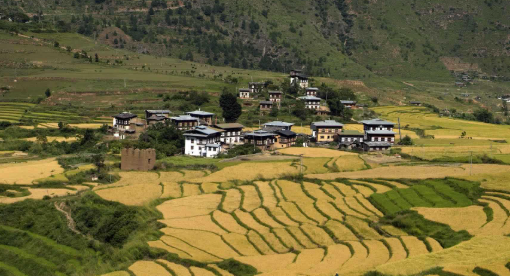
Punakha served as the capital of Bhutan until and still it is the winter seat of Je Khenpo (the chief abbot). Blessed with temperate climate and owing to its natural drainage from Pho Chhu (male) and Mo Chhu (female) rivers, the Punakha valley produces abundant crops and fruits. There are splendid views of the distant Himalayas at Dochula pas (alt. 3,050m) on Thimphu – Punakha road.
Places of interest in and around Punakha
1. Punakha Dzong
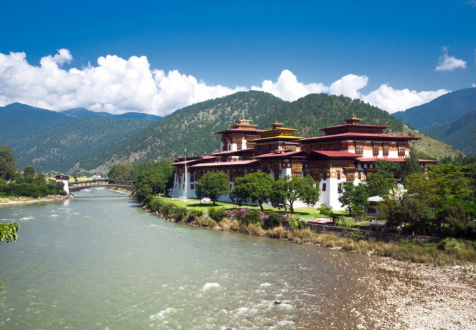
Punakha Dzong, also known as “The Palace of Great Bliss,” is one of Bhutan’s most iconic fortresses. Built in 1637 by Zhabdrung Ngawang Namgyal at the confluence of the Pho Chhu and Mo Chhu rivers, it served as both a religious and administrative center. The dzong has played a major role in Bhutan’s history, including the coronation of the first King in 1907. Despite damage from fires, floods, and earthquakes, it has been fully restored and remains the winter residence of the central monastic body and an important national landmark.
2. Chimi Lhakhang
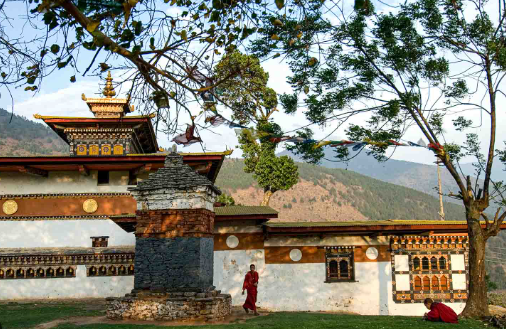
Chimi Lhakhang is a fertility temple dedicated to Lama Drukpa Kuenley, the Divine Madman. It is believed that prayers here bless couples with children, making it a popular pilgrimage site in Punakha.
3. Khamsum Yulley Namgyal Chorten
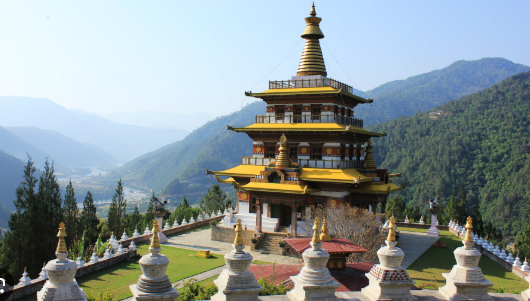
Built by the Queen Mother, this stunning chorten promotes peace and harmony. It offers a rewarding hike with breathtaking views of the Punakha valley and surrounding mountains.
4. Sangchhen Dorji Lhuendrup Lhakhang
A serene hilltop nunnery overlooking Punakha and Wangdue valleys. It houses a large Avalokiteshvara statue and serves as both a meditation center and learning institute for Buddhist nuns.
5. Limbukha
Limbukha is a peaceful village known for red rice farming and a historic role in peacekeeping. Villagers traditionally served as negotiators rather than warriors during conflicts.